
The Gen Z Rebellion
Why They're Angry, What They Believe & Where It's Heading
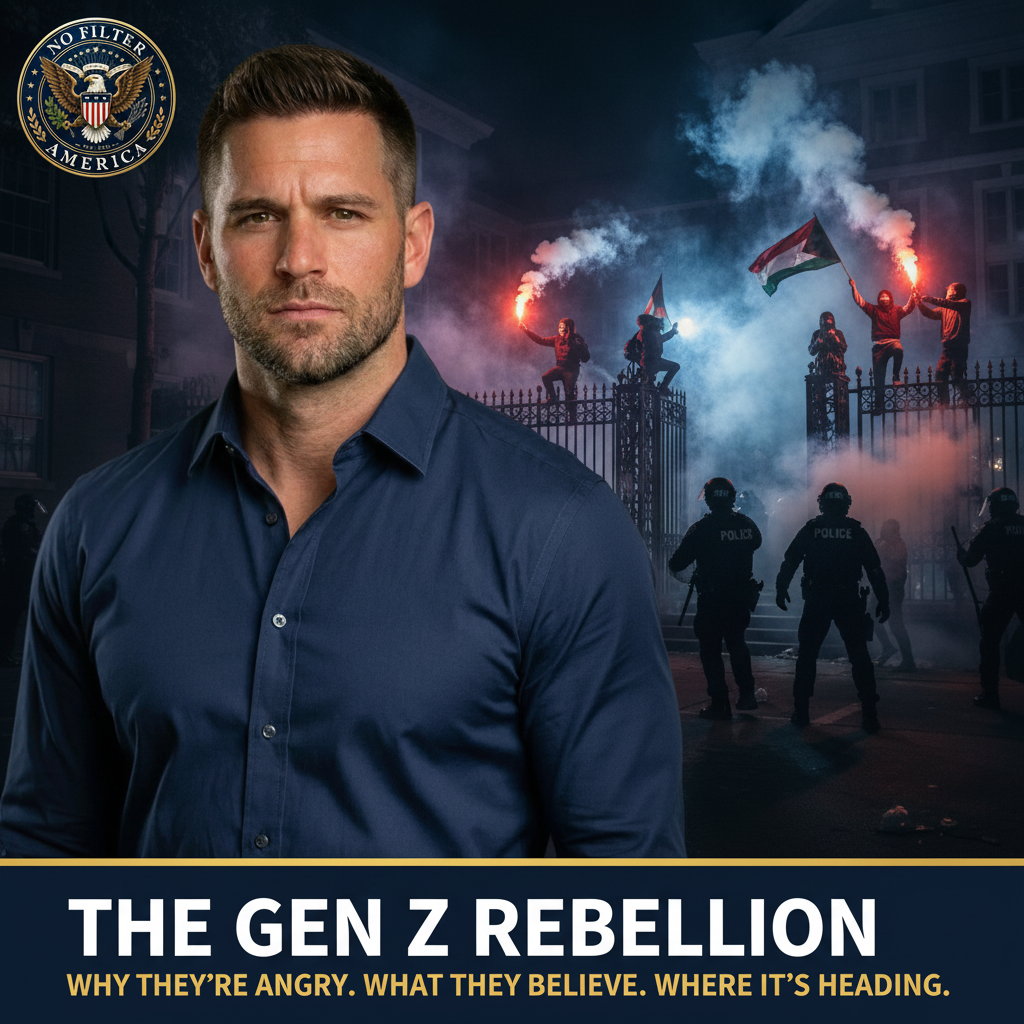
Generation Z was supposed to be the most educated, most connected, most opportunity-rich cohort in American history.
The YouGov survey found that while Gen Z has increasingly favorable views of socialism and Marxism, they dramatically underestimate what those systems actually looked like in practice. Only 26% of Gen Z believe Marxism most looks like "a totalitarian state that suppresses the freedom of its citizens" — compared to 72% of the Silent Generation and 58% of Baby Boomers who lived through or studied the actual historical consequences of those systems.
If this investigation was useful, help others discover it by sharing.
Viewing is free — downloading and printing evidence files requires an active NFA Investigation Alerts subscription.

Generation Z was supposed to be the most educated, most connected, most opportunity-rich cohort in American history. Instead they became the most indebted, the most underemployed, and increasingly — the most politically radicalized.
This is not a social media trend. It is not a campus fad that will fade when the semester ends. Three separate research institutions — the Federal Reserve Bank of New York, the Institute for Youth in Policy, and the Victims of Communism Memorial Foundation — have now independently documented the same thing: a structural, data-confirmed ideological rupture between Generation Z and the economic system they were born into.
The unemployment rate for recent Gen Z college graduates ages 22–27 sits at 5.6% — significantly higher than the national average of 4.2%. But unemployment alone doesn't capture the real crisis. The deeper wound is underemployment: 42% of recent college graduates are working jobs that don't require a degree at all. For the first time in 50 years, a four-year college diploma offers roughly the same job market advantage as a high school diploma.
They took the deal. They went to college. They graduated with the debt. And the door was shut in their face anyway. Is it any wonder they're angry?
The economic pressure on Gen Z is not a single problem. It is a simultaneous compression from multiple directions that has left an entire generation with no obvious path forward.
The Job Market Collapse: Economists and workplace experts identify three structural reasons why entry-level corporate roles have dried up. First, the Post-Pandemic Freeze — in 2021 and 2022, companies over-hired at inflated salaries to compete for talent during the labor shortage. Now they're cutting costs, and entry-level workers are the first casualty. Second, Low Corporate Turnover — people already inside companies are staying put in an uncertain economy, leaving no openings for new graduates to fill. Third, the "Pre-Experienced" Demand — employers now expect entry-level workers to arrive with multiple internships and specialized skills, effectively requiring experience to get the experience.
The AI Displacement Wave: The integration of artificial intelligence and generative technologies into the workplace has eliminated or fundamentally altered many traditional entry-level and junior roles — exactly the jobs that new graduates historically filled. The algorithmic job market that was supposed to create opportunity has instead created a barrier that didn't exist for any previous generation.
The Blue-Collar Pivot: The response has been pragmatic. Nearly 60% of Gen Z workers are now embracing skilled trades and blue-collar work as a more stable long-term path — a seismic shift away from the white-collar pipeline that universities spent decades selling them.
"In polling, roughly 58% of graduates from the past year report they are still looking for a job in their actual field. Only about 30% of grads say they found a full-time job in their field right out of school. Many sent out over 300 applications just to land a single offer."
The job market is only half the story. The other half is what waits for Gen Z when they try to simply live.
According to the Institute for Youth in Policy's December 2025 analysis, the U.S. rental market has experienced a transformation that has gone from a temporary inflationary spike to a permanent generational mobility barrier. From April 2020 to 2025, the typical U.S. apartment rent climbed by 28.7%. In that same period, median household income grew by only 22.5%. The gap between those two numbers is the gap between a generation that can build stability and one that cannot.
The National Low Income Housing Coalition estimates a rental-home shortage of roughly 8 million units for low-income renters. More than 90% of U.S. counties saw median rents and housing prices rise faster than median incomes between 2000 and 2020. Nearly 31.3% of all U.S. households were classified as "cost-burdened" in 2023 — defined as spending more than 30% of income on housing. Among renters alone, that figure approaches half of all households.
For Gen Z, this has transformed traditional life milestones — leaving home, renting an apartment, buying a first house — from expected markers of adulthood into distant, theoretical aspirations. A striking 84% of Gen Z aspiring homeowners report delaying major life decisions until they can afford a home. The median age of the first-time homebuyer has risen sharply, pushing homeownership out of reach for most people in their 20s and early 30s.
The Federal Reserve's aggressive rate-hiking cycle — raising the federal funds rate from 0.25% in March 2022 to 5.50% by July 2023 — was intended to kill inflation. It did moderate price growth. But it simultaneously made every form of borrowing more expensive: mortgages, student loans, auto loans, credit cards. For Gen Z, who entered the credit market at exactly the worst moment, the cure inflicted its own wounds.
Beyond the economic data, Gen Z faces a psychological burden that no previous generation has ever navigated: growing up inside an infinite digital comparison machine that never turns off.
They are the first generation to have algorithms in their pockets from childhood. Every moment of their lives has been filtered through a feed that shows them curated versions of other people's success, beauty, wealth, and apparent happiness. The research on what this does to a developing psyche is unambiguous. The result is what researchers are calling "Comparison Fatigue" — an unprecedented level of alienation, anxiety, and inadequacy that has become the baseline emotional condition of an entire generation.
Unlike older generations who wore exhaustion as a badge of honor — who equated grinding and overwork with moral virtue — Gen Z has decisively rejected the concept of burnout culture. They prioritize mental health and work-life balance over chasing a high starting salary. Older generations call this laziness. The data suggests it is something else: a rational response to a system they watched break their older siblings and parents.
COVID-19 completed the psychological transformation. It hit Gen Z during their most formative educational years — disrupting college experiences, eliminating entry-level networking opportunities, and forcing isolation at the precise moment young people are supposed to be building their social and professional infrastructure. The result is deep, structural institutional distrust directed at government, media, universities, and corporate employers — the very institutions that were supposed to be the gateway to the American Dream.
The economic conditions described above did not create a generation of passive victims. They created something more consequential: a generation with a coherent, data-backed ideological worldview that has departed sharply from the American mainstream.
The Victims of Communism Memorial Foundation commissioned YouGov to survey 2,100 Americans across all generations in September 2020 — one of the most comprehensive datasets on generational ideology ever assembled. The findings are striking.
The favorability of the term "capitalism" has fallen to just 52% among Gen Z — while Millennials hit a new low of 43%. These are the lowest numbers in the history of this annual survey. Meanwhile, socialism's favorability among Gen Z has climbed back to 49%, with Marxism reaching 30% favorability — its highest level among young Americans.
But the most revealing data point is not about specific ideologies — it is about how Gen Z perceives the fundamental fairness of the American system. 48% of Gen Z say America's economic system works against them. 44% say America is one of the most unequal societies in the world. And remarkably, 51% of Gen Z view America as a racist nation with a long history of discrimination — compared to only 25% of the Silent Generation.
These are not abstract philosophical positions. They are the direct conclusions of young people who graduated into a rigged job market, watched their rent consume their paychecks, and carried student debt with no clear path to repayment.
Victims of Communism Memorial Foundation / YouGov Annual Survey on U.S. Attitudes Toward Socialism, Communism, and Collectivism. October 2020. N=2,100 Americans ages 16+. Survey conducted September 9–28, 2020. Findings are weighted and nationally representative.
Here is where the NFA analysis departs from simple cheerleading — because the data reveals something deeply concerning about the ideological shift happening among young Americans.
The YouGov survey found that while Gen Z has increasingly favorable views of socialism and Marxism, they dramatically underestimate what those systems actually looked like in practice. Only 26% of Gen Z believe Marxism most looks like "a totalitarian state that suppresses the freedom of its citizens" — compared to 72% of the Silent Generation and 58% of Baby Boomers who lived through or studied the actual historical consequences of those systems.
Furthermore, 68% of all Americans do not define socialism as the government owning all property and controlling nearly 100% of the national economy — which is the textbook definition. Most Gen Z respondents define socialism as something closer to Scandinavian-style social democracy, or simply "a system that hasn't been created yet." They are voting for a concept they've largely defined themselves, based on what they want it to be — not on what it has historically delivered.
This knowledge gap is not entirely their fault. The survey also found that only 30% of Gen Z are aware that the Chinese Communist Party has been responsible for more deaths than Nazi Germany — a historical fact that 47% of Gen Z respondents simply didn't know. The generation that has unprecedented access to information is, paradoxically, some of the most historically uninformed on the specific subject they're now advocating for.
When you are drowning in student debt, priced out of a home, and watching your job applications disappear into algorithmic voids, history feels distant and abstract. The immediate pain is real. The ideological prescription being sold to them online has not been vetted against that history.
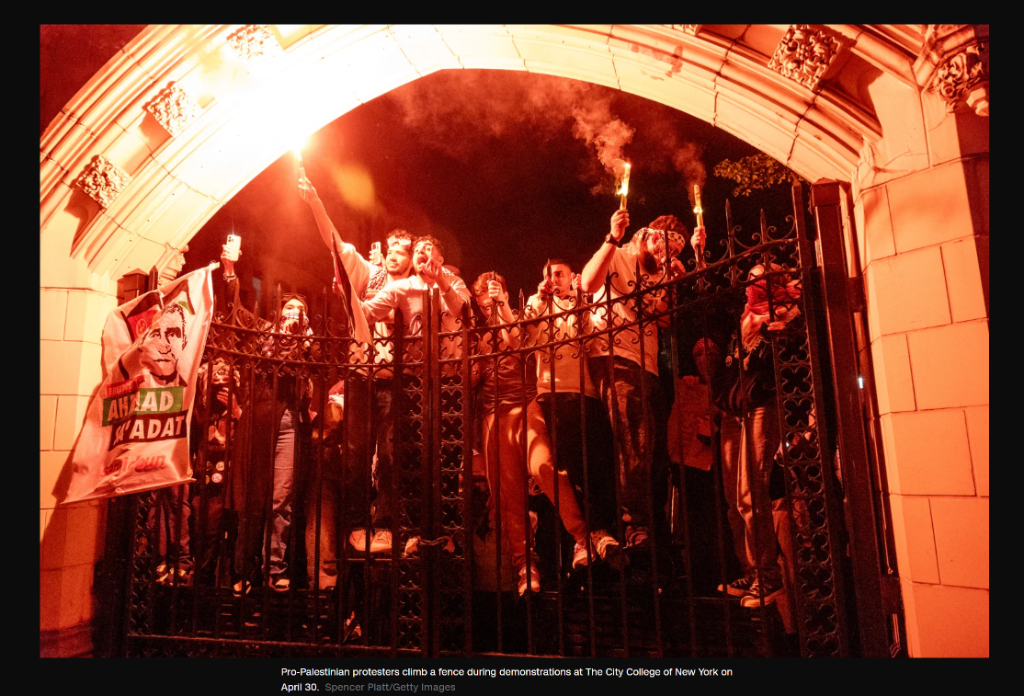
In the spring of 2024, the accumulated economic frustration and ideological radicalization of an entire generation found its most visible expression: a wave of campus uprisings that swept more than 50 American universities in a single week.
What distinguished 2024 from previous protest cycles was not the anger — it was the infrastructure. There was no single leader. No central organizing headquarters. No press conference announcing a march. Instead, organizers used Discord and Reddit to plan logistics in private, TikTok to educate and recruit, and Instagram to mobilize thousands to a specific campus location in under 48 hours.
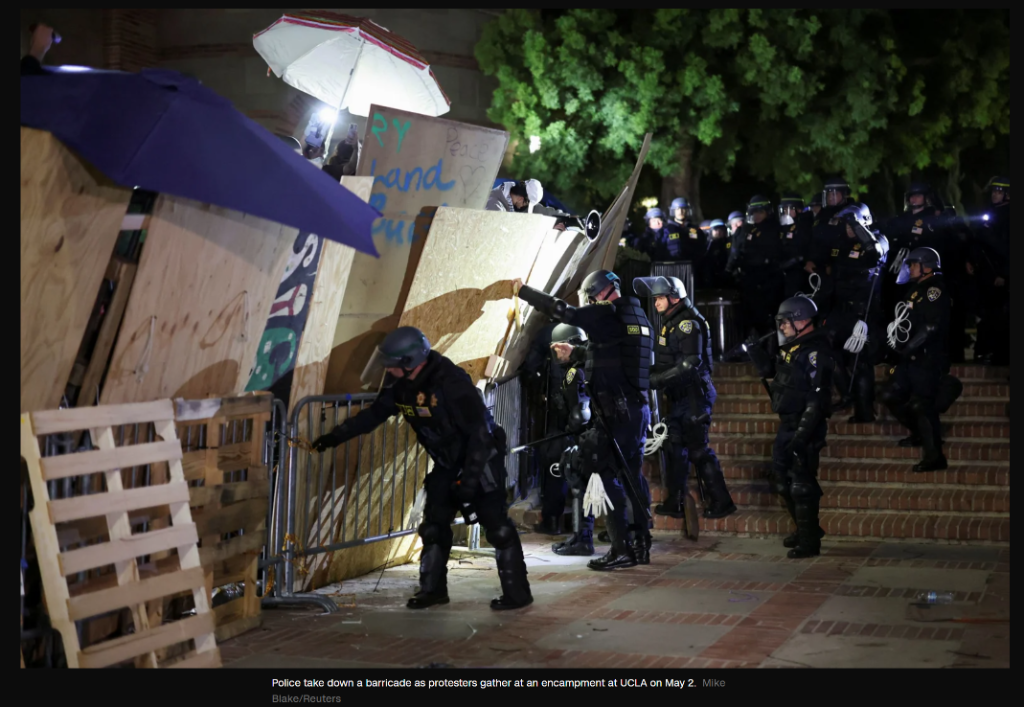
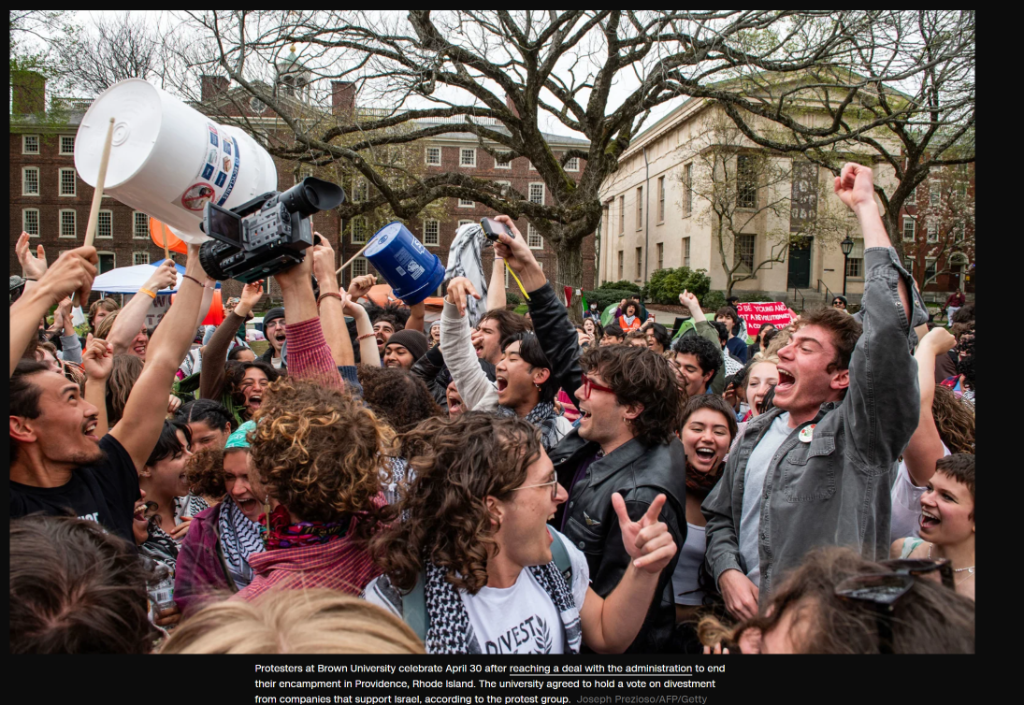
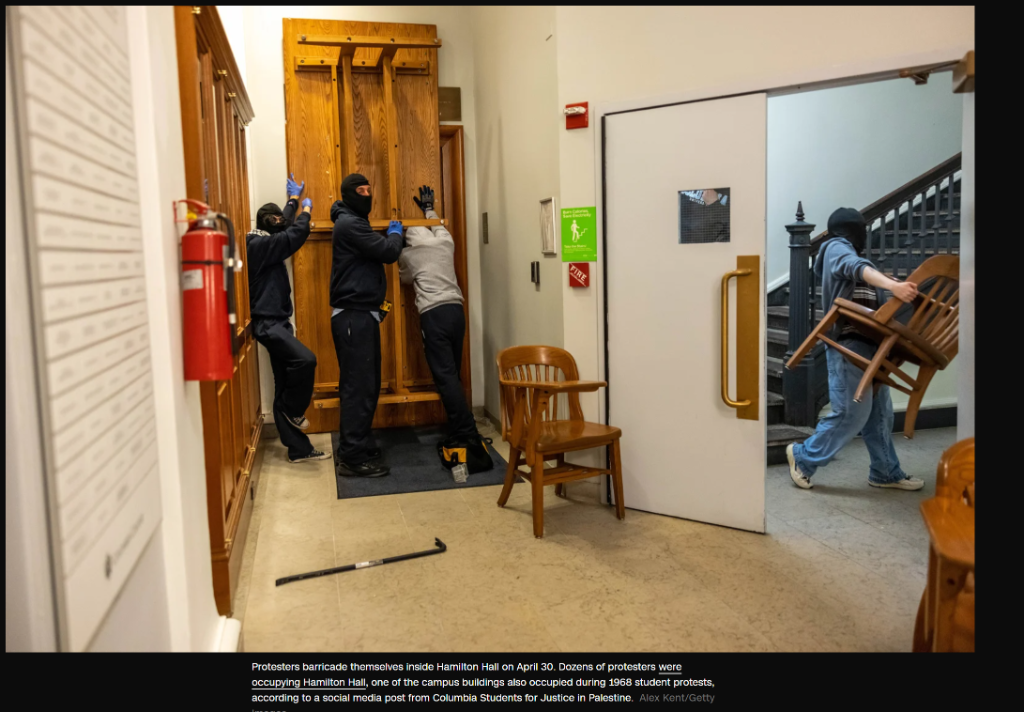
The tactics were sophisticated enough to unsettle university administrators who had spent decades managing student activism. At UCLA, protesters constructed fortified plywood barricades with organized supply chains. At Columbia, Hamilton Hall was seized in a deliberate echo of the 1968 student uprising. At Brown, sustained encampment pressure forced the first Ivy League administration in American history to agree to a formal vote on divestment demands.
Political analysts have a name for what happened: the "Speed of the Algorithm" revolt. Youth-led movements using this exact playbook have toppled governments in Bangladesh, Nepal, Madagascar, and Bulgaria in recent years. The triggers there — tax hikes, water shortages, government corruption — are different in name but identical in emotional texture to what is driving Gen Z in America: debt, unaffordability, and a government they believe serves someone other than them.
| Policy Position | Gen Z Support | Source |
|---|---|---|
| Support gradual elimination of capitalism in favor of socialism | 31% | YouGov/VOC 2020 |
| Support Universal Basic Income (monthly government stipend) | 43% | YouGov/VOC 2020 |
| Believe the divide between rich and poor is a "very/somewhat serious" issue | 78% | YouGov/VOC 2020 |
| Believe highest earners are NOT paying their fair share in taxes | 68% | YouGov/VOC 2020 |
| Favor strict rent controls, universal healthcare, student debt forgiveness | Majority | Gen Z Research Brief 2025 |
| View America as a "racist nation with a long history of discrimination" | 51% | YouGov/VOC 2020 |
| Believe climate change is the #1 threat to national security | 38% | YouGov/VOC 2020 |
| Less hesitant or opposed to voting for a democratic socialist candidate | Down to 29% opposed (from 44%) | YouGov/VOC 2020 |
| Trust themselves — not government or community — to take care of their interests | 77% | YouGov/VOC 2020 |
One nuance buried inside the data deserves specific attention: despite their socialism-favorable views, 77% of Gen Z say they most trust themselves — not the government or their community — to take care of their own interests. That number is up sharply from 66% in 2019.
This is the internal contradiction at the heart of Gen Z ideology: they want government intervention to fix structural problems, but they have deep personal distrust of the government's ability to actually deliver it. They favor socialism as a concept while increasingly relying on individual self-determination in practice.
They are not ideologically consistent. They are pragmatically desperate. And desperation, history has shown, is the most politically volatile force in human society.
⚖ NFA ANALYSIS: WHAT AMERICA NEEDS TO UNDERSTAND
The Gen Z rebellion is not a tantrum. It is a documented, data-confirmed response to structural economic failure. When you charge an entire generation $100,000 for a diploma that delivers no return, price them out of every housing market, and replace their entry-level jobs with algorithms — and then express shock that they're skeptical of the system that did it — you are missing the point entirely.
But the ideological destination they are drifting toward is genuinely dangerous. A generation that has been failed by capitalism is being recruited, largely through social media, toward systems with a documented historical track record of mass failure. The YouGov data is clear: they have favorable views of ideologies they cannot define, and they are unaware of the historical death tolls those ideologies produced. That knowledge gap is not a small problem. It is the entire problem.
The bright spots are real: Despite everything, Gen Z is adapting. Some are leveraging index funds and multi-generational households to build wealth in secondary markets. Nearly 60% are pivoting to skilled trades and finding stability outside the corporate pipeline. And 77% still trust themselves above all others to determine their own fate — which is, at its core, a deeply American instinct.
The question America must answer is not whether Gen Z is angry — they are, and they have receipts. The question is whether the country will address the structural failures that created this anger before that anger finds an outlet that cannot be walked back.
WHEN A GENERATION IS TOLD THE SYSTEM IS BROKEN AND NOBODY FIXES IT — THEY STOP ASKING PERMISSION TO BREAK IT THEMSELVES.

Get notified when a new investigation or evidence file is published.
No spam. No selling your data. Investigations only — unsubscribe anytime.
If this investigation was useful, help others discover it by sharing.
Get notified when a new investigation or evidence file is published.
No spam. No selling your data. Investigations only — unsubscribe anytime.
Get notified when a new investigation or evidence file is published.
No spam. No selling your data. Investigations only — unsubscribe anytime.