
What Happens If He Refuses to Leave
The Constitution, Martial Law & The 2029 Question America Is Actually Asking
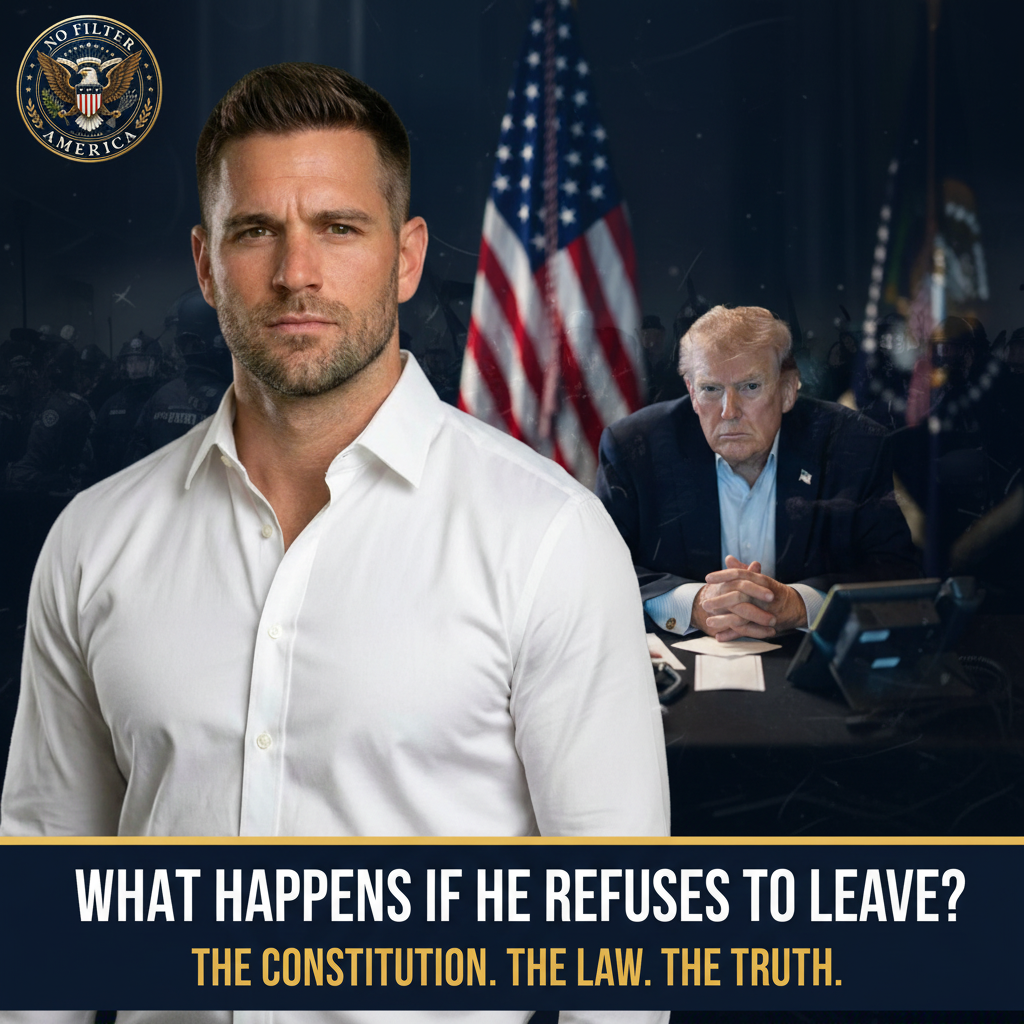
"What if Trump just refuses to leave?"
Here is the hard, documented truth: at exactly 12:00 PM on January 20, 2029, Donald J. Trump's constitutional authority will legally and permanently vanish. Not gradually. Not conditionally. Instantly.
If this investigation was useful, help others discover it by sharing.
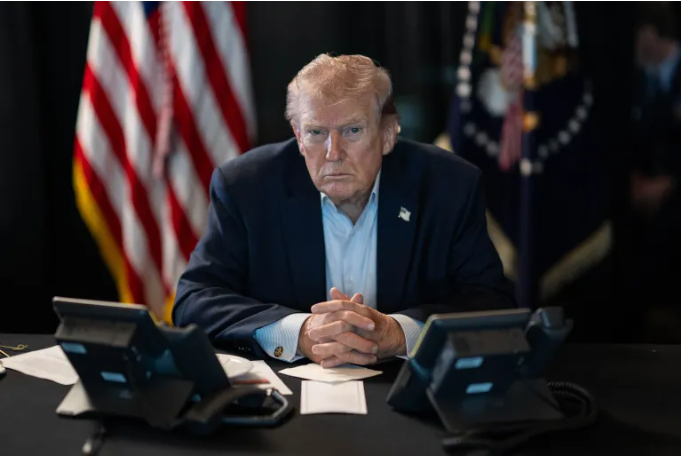
The scenario is everywhere. TikTok. Reddit. Facebook. "What if Trump just refuses to leave?" Millions of Americans are asking it. The algorithms are amplifying it. And the anxiety it generates is very real.
So let's answer it — not with opinion, not with panic, and not with partisan spin. With facts. With law. With the actual historical record of every time America has been down this road before.
Here is the hard, documented truth: at exactly 12:00 PM on January 20, 2029, Donald J. Trump's constitutional authority will legally and permanently vanish. Not gradually. Not conditionally. Instantly.
Under the 22nd Amendment, no person may be elected president more than twice. Trump is serving his second and final term. When it expires, he cannot issue a single executive order, command a single soldier, or invoke a single emergency power. He becomes, in the eyes of the law, a private citizen.
The military's oath is not to the person in the Oval Office. It is to the Constitution. The moment a new president takes the oath, the full weight of the federal government — including the Secret Service, the FBI, and every branch of the armed forces — legally transfers to the new commander-in-chief.
If a former president physically refused to vacate the White House after that moment, he would be treated as a trespasser. Law enforcement would remove him. The building would no longer be his.
But here is where the story gets more complicated — and more important. Because the fantasy version of a presidential coup is not where the real constitutional danger lives.
❌ WHAT TIKTOK SAYS
✅ WHAT THE LAW SAYS
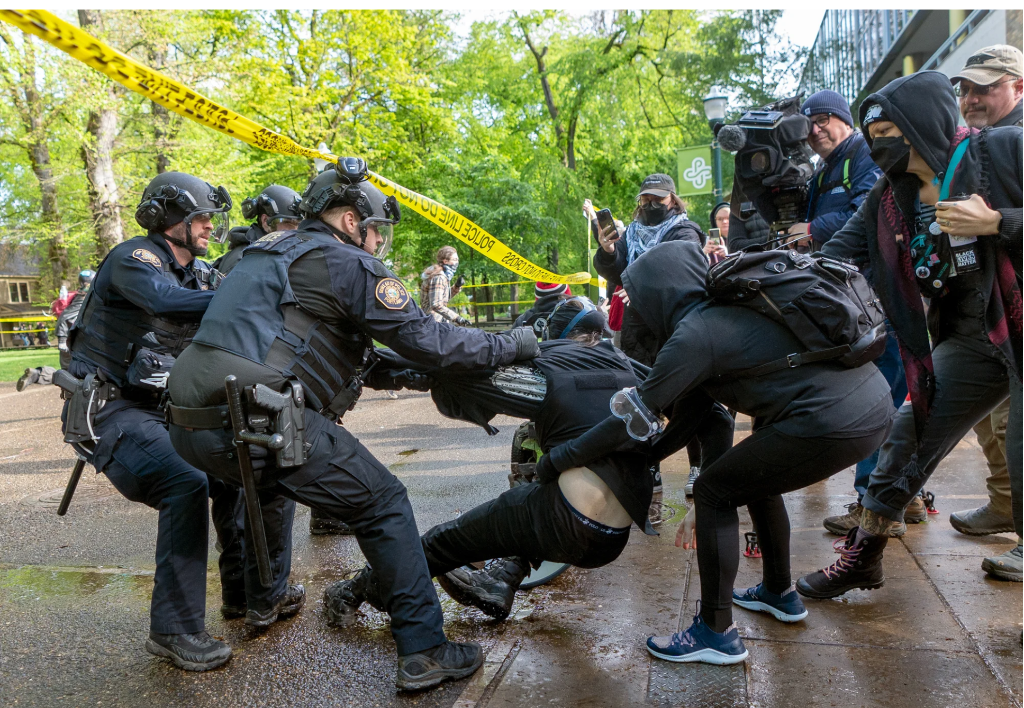
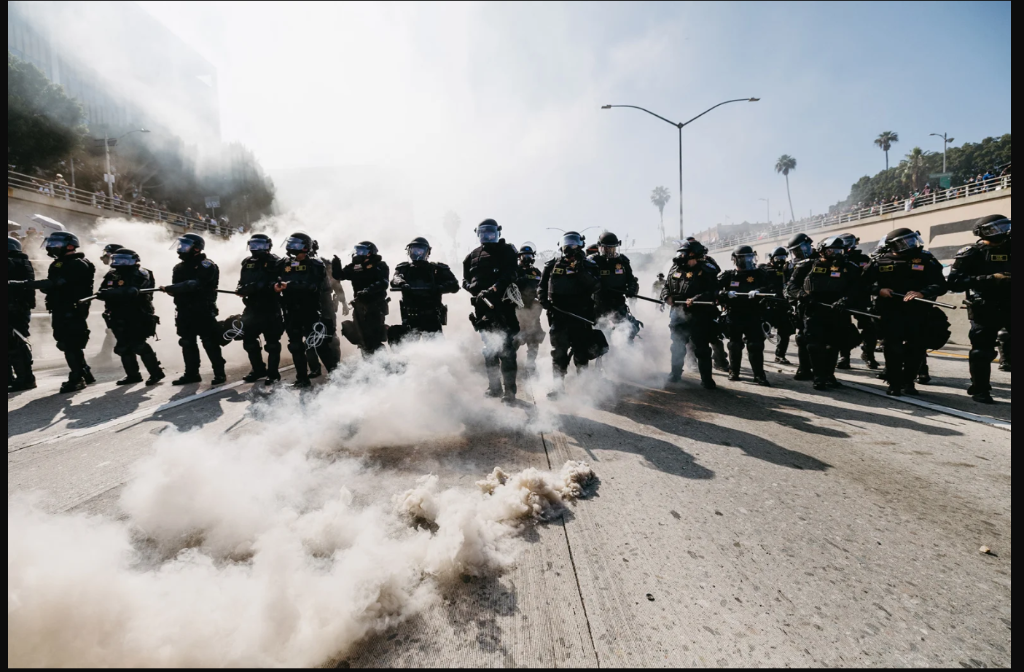
The "Trump refuses to leave" narrative is sensationalism. The actual legal risk — the one that keeps constitutional scholars genuinely concerned — is something quieter and more dangerous. It is called the Insurrection Act.
Unlike the fantasy of a unilateral martial law declaration, the Insurrection Act is a real, 200-year-old federal law that gives a sitting president sweeping authority to deploy active-duty troops domestically — even against the explicit wishes of state governors.
Under Section 252, the president can deploy the military whenever "unlawful obstructions or assemblages" make it "impracticable" to enforce federal law through "the ordinary course of judicial proceedings." That language is dangerously vague. It could be applied to a protest. A riot. A contested election result. A social movement that disrupts normal civic function.
In June 2020, Attorney General William Barr advanced an interpretation of Title 32 that would allow the president to deploy National Guard forces "at any time and for any reason" — a reading constitutional scholars called "shockingly broad" and a "gaping loophole" in the Posse Comitatus Act.
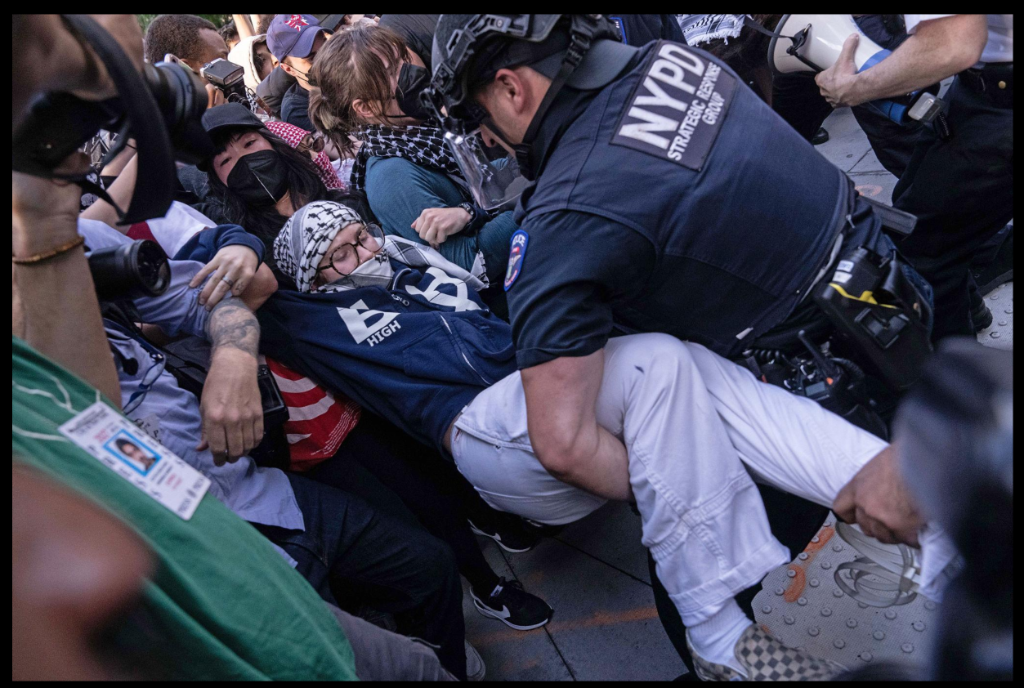
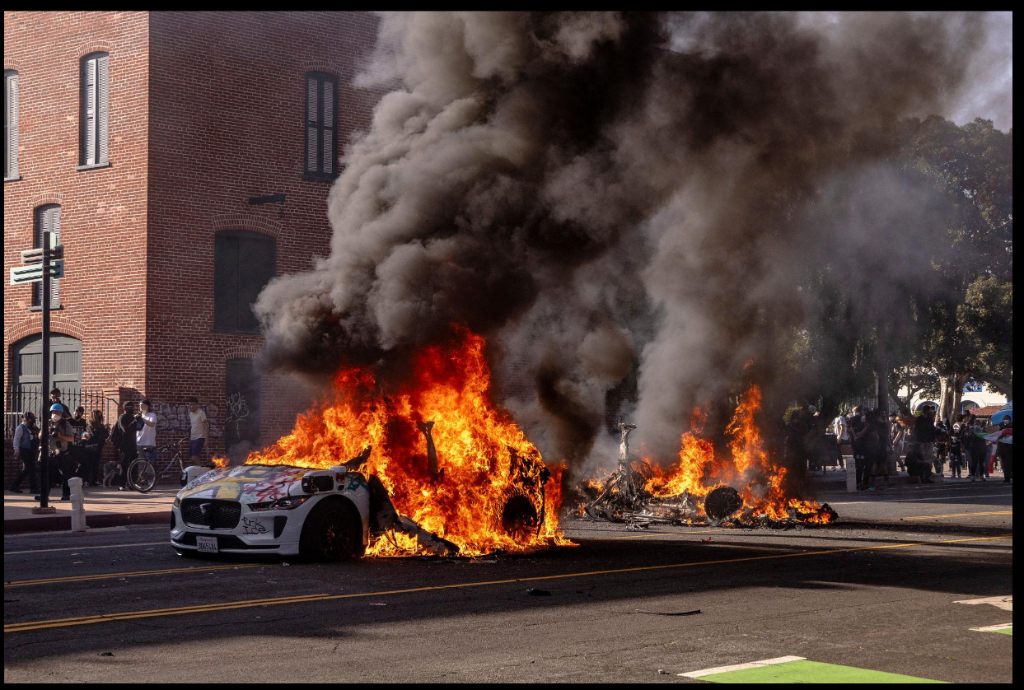
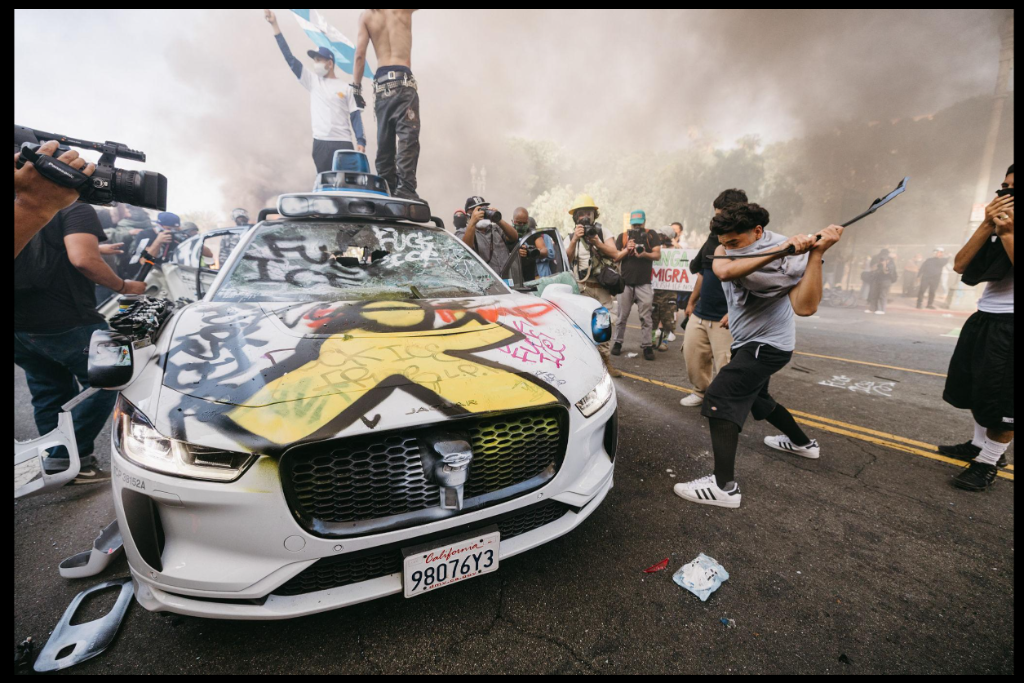
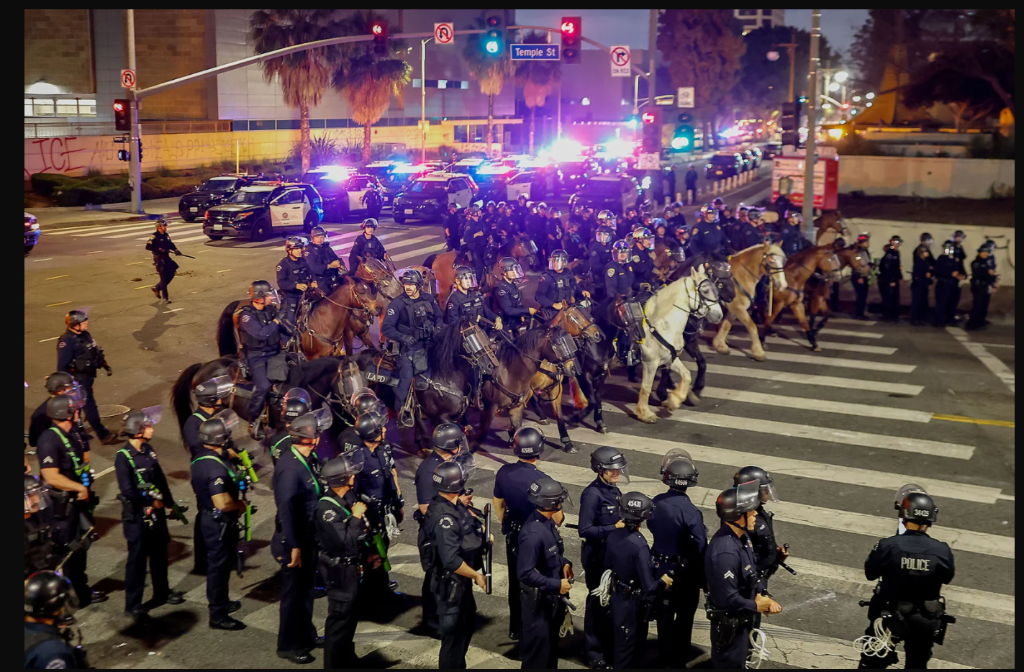
The legal difference between "troops deployed under the Insurrection Act" and "martial law" may be technically significant. But to the American citizens facing those troops in the streets — it would feel exactly the same.
"In the United States, power does not belong to the person sitting in the Oval Office — it belongs to the office itself. The moment the term expires, so does every ounce of authority that came with it."
Here is what most people debating martial law on social media don't know: the United States has declared martial law 347 documented times since 1814. The Brennan Center for Justice compiled the full record — every declaration, every state, every trigger, every outcome.
The pattern that emerges is clear and consistent: martial law has almost always been a state-level tool. Of 347 total declarations, well over 300 were made by state governors, legislatures, or National Guard commanders — not by the federal government.
The most common trigger in American history for martial law? Labor strikes. Not war. Not terrorism. Mine owners calling in governors to crush workers. That is the actual history of this power in America.
The federal government has declared martial law only a handful of times. The most recent was Hawaii in 1941 — following the Japanese destruction of Pearl Harbor. That was 84 years ago. It required an active foreign invasion of U.S. soil, the physical destruction of military infrastructure, and the complete closure of civilian courts. None of those conditions exist today.
| Year | Location | Duration | Authority | Trigger | Tribunals? |
|---|---|---|---|---|---|
| 1814 | New Orleans, LA | 3 months | Gen. Andrew Jackson (Federal) | War of 1812 — Battle of New Orleans | YES |
| 1842 | Rhode Island | 11 months | RI General Assembly (State) | Dorr War — voting rights dispute | No |
| 1857 | Utah Territory | 9 months | Gov. Brigham Young (Territorial) | Utah War — resistance to federal troops | No |
| 1861 | Missouri | 4 years | Gen. John C. Fremont (Federal) | Confederate insurgency — Civil War | Unclear |
| 1862 | United States | 4 years | Pres. Abraham Lincoln (Federal) | U.S. Civil War — Proclamation 94 | YES |
| 1871 | S. Carolina (9 counties) | Months | Pres. Ulysses S. Grant (Federal) | KKK terrorism — Ku Klux Klan Act | No |
| 1892 | Coeur d'Alene, ID | Months | Gov./Federal troops (State req.) | Silver miners' strike — labor unrest | No |
| 1903 | Cripple Creek, CO | Months | Gov. James Peabody (State) | Miners' strike — requested by mine owners | YES |
| 1906 | San Francisco, CA | Days | Gen. Frederick Funston (Federal) | 1906 San Francisco Earthquake | No |
| 1914 | Ludlow, Colorado | Months | Pres. Woodrow Wilson (Federal) | Ludlow Massacre — coal miners' strike | No |
| 1920 | Lexington, KY | Brief | Gen. Francis C. Marshall (Federal) | Lynch mob storming courthouse | No |
| 1933 | Georgia (statewide) | Brief | Gov. Eugene Talmadge (State) | Political scheme to remove agency heads | No |
| 1941–1944 | Hawaii (Territory) | 3 years | Governor + Military (Federal) | Japanese attack on Pearl Harbor | YES |
| 1963 | Cambridge, Maryland | 14 months | Gov. J. Millard Tawes (State) | Racial justice clashes with segregationists | No |
IT REQUIRED AN ACTIVE FOREIGN ATTACK ON AMERICAN SOIL.
2029
11:59 AM
Every executive power remains intact. He can still issue orders. The military still reports to him. The Secret Service still protects him as the sitting president of the United States.
2029
12:00 PM
The moment the new president takes the oath of office, Trump's authority legally ceases to exist. He cannot issue executive orders. He cannot command troops. He is a private citizen. The new president is now Commander-in-Chief of the most powerful military on earth.
2029
12:01 PM
The Secret Service, FBI, all military branches, the entire executive apparatus — all legally answerable to the new president. If Trump remained in the White House, he would be treated as a trespasser. Law enforcement — now serving the new commander-in-chief — would escort him from the building.
IF REFUSED
Federal courts would issue an immediate injunction within hours. The new president's DOJ and Secret Service would enforce removal. Every general and admiral is legally bound to the new commander-in-chief. The scenario ends within hours — not days — through entirely civilian legal process.
RISK:
PRE-2029
The actual constitutional risk is not refusal to leave in 2029. It's the Insurrection Act being invoked during civil unrest BEFORE or DURING the 2028 election cycle. A sitting president can deploy troops under this law right now. Governors would sue immediately. The Supreme Court would face a high-stakes constitutional battle with no modern precedent to guide it.
⚖ NFA VERDICT: THE UNFILTERED BOTTOM LINE
The "refuses to leave" scenario is legally impossible. The Constitution does not require a president's cooperation to end his own presidency. Power transfers automatically at noon on Inauguration Day. The military swears its oath to the Constitution — not the man. The courts remain open. The system holds.
The TikTok fear machine is doing exactly what it was engineered to do — taking a real anxiety, stripping out all legal context, and monetizing your panic. Every share, every view, every anxious comment generates revenue for platforms that profit from your fear.
But here is what IS worth paying attention to: The Insurrection Act gives any sitting president dangerously broad authority to deploy active-duty troops on American streets. Congress has never passed legislation clearly defining its limits. That grey zone is real. It is not a 2029 problem — it is a right-now problem that could become relevant any time civil unrest escalates.
IF YOU'RE SCARED ABOUT 2029 — DON'T BE. IF YOU'RE IGNORING THE INSURRECTION ACT — START PAYING ATTENTION.

Get notified when a new investigation or evidence file is published.
No spam. No selling your data. Investigations only — unsubscribe anytime.
If this investigation was useful, help others discover it by sharing.
Get notified when a new investigation or evidence file is published.
No spam. No selling your data. Investigations only — unsubscribe anytime.
Get notified when a new investigation or evidence file is published.
No spam. No selling your data. Investigations only — unsubscribe anytime.